Producer prices ran hot. The ECB hiked for the first time in nearly three years. Iran shut the Strait of Hormuz. And gold - the asset that's supposed to thrive on exactly this kind of chaos - quietly broke below its 200-day moving average.
It was the kind of macro day that should have launched gold into the stratosphere.
It did the opposite.
Here's what actually happened on Thursday
A lot, frankly. Let's go through it.
- May PPI came in at 6.5% year-over-year, the highest reading since November 2022 and above the consensus estimate of 6.4%. Core PPI held at 4.9%, in line with April's revised print. Translation: producer-level inflation is back at pandemic-stimulus levels, and the path from here doesn't run downhill.
- The European Central Bank raised rates by 25 basis points, its first hike in nearly three years. The official framing leaned heavily on inflationary pressure tied to the ongoing Iran conflict. Markets read it as central banks pivoting back into defense mode.
- Iran's Khatam Al-Anbiya Central HQ declared a full closure of the Strait of Hormuz in response to recent US military actions. Roughly a fifth of the world's seaborne oil moves through that waterway. Brent and WTI moved accordingly.
- US crude inventories fell for the seventh straight week, dropping another 7.2 million barrels. The Strategic Petroleum Reserve now sits at its lowest level since August 2023.
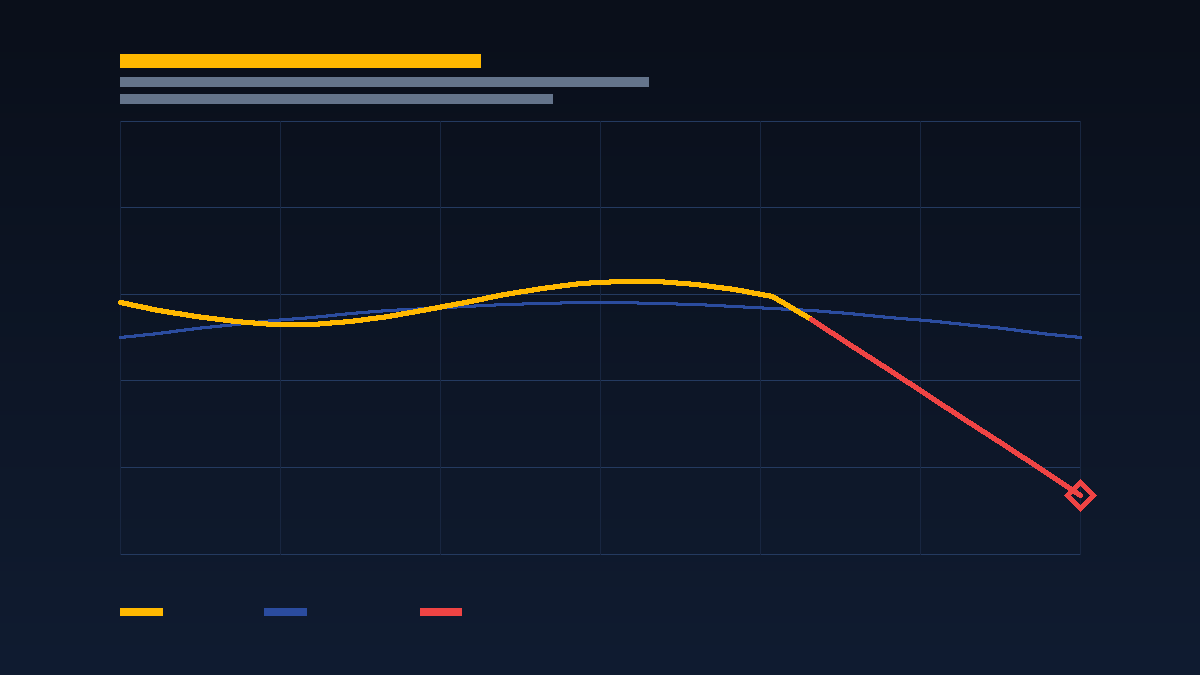
The textbook reaction to all of that - hot inflation, central banks hiking, oil supply shock, currency stress - is for gold to rip. Instead, spot gold sliced through its 200-day moving average for the first time in months, triggering systematic selling from CTA models.
So why is gold actually falling?
Three forces, working in the same direction, all of them annoying for bulls.
One: dollar strength. When the ECB hikes alongside the Fed, the relative-policy advantage that's been propping up the euro flattens. Add safe-haven dollar demand from the Hormuz news, and you get DXY pressure that gold simply can't fight in the short term. Gold is priced in dollars. A stronger dollar is a mechanical headwind.
Two: real yields. Hot PPI plus the prospect of higher-for-longer Fed funds nudged real yields higher across the curve. Gold pays no coupon. When TIPS yields rise, the opportunity cost of holding metal rises with them.
Three: technical positioning. Once spot punched through the 200-day, CTA models flipped from long-bias to neutral. That flow is real and it shows up in COMEX volume.
The contrarian signal nobody's talking about
Here's where it gets interesting.
The Gold Miners Bullish Percent Index has fallen to zero. Not low. Zero. That's a reading of complete and total pessimism on the miners, and historically it doesn't stay there long. The last several times the index touched these levels, GDX rallied meaningfully within weeks.
Extreme sentiment is not a timing signal. It is a setup signal. "Zero" doesn't tell you the bottom is in tomorrow. It tells you that nearly every weak holder has already capitulated, and the next meaningful news event lands on a market with no bulls left to lose.
Zoom out
The macro backdrop is the most gold-friendly it has been in years. Inflation is reaccelerating, central banks are scrambling, the Middle East is one headline away from a wider conflict, and the SPR is running on fumes.
Yet today, gold sold off.
Welcome to the part of the cycle where the trade and the thesis stop holding hands for a minute.
If you take one thing away: the macro story didn't change today. The price did. Those two things often diverge for longer than is comfortable.
They rarely diverge forever.
